
Scheduled Waste Management in Malaysia: From Generation to Final Destination
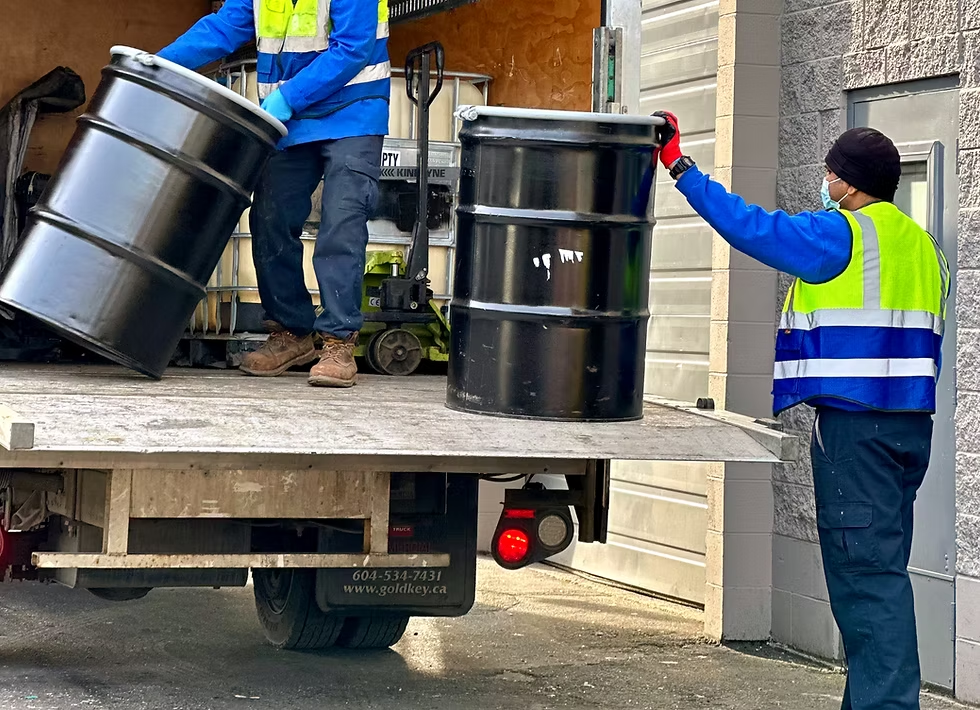
A lorry arrives, the drums are loaded and the scheduled waste leaves the gate. For a busy operations team, that moment can feel like the end of the job. The waste room has space again, the paperwork appears complete and somebody else is now handling the material.
But scheduled waste does not become somebody else’s problem simply because it is no longer visible. Its journey begins before collection and continues through transportation, recovery, treatment or disposal. Each stage depends on how the waste was identified, stored, recorded and ultimately sent.
Supervisors, maintenance teams, purchasing personnel and managers all affect whether that system works. Let us follow the waste from the process that created it to its final destination.
Identifying the Waste Before Its Journey Begins
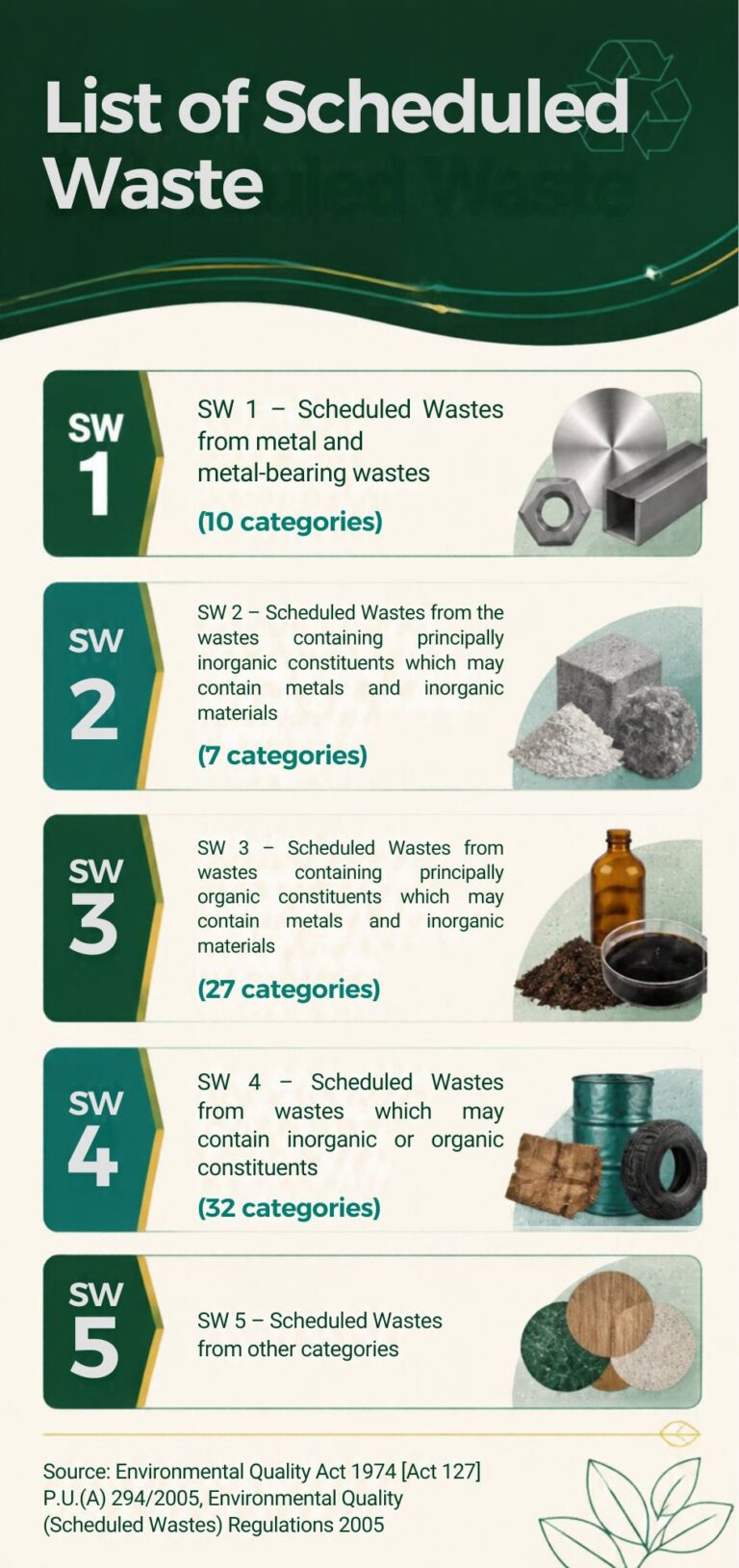
Malaysia’s Department of Environment explains that scheduled waste is waste with hazardous characteristics that may negatively affect people or the environment. It also notes that 77 types are listed in the First Schedule to the Environmental Quality Scheduled Wastes Regulations 2005 (DOE scheduled waste information).
That definition matters because appearance alone is unreliable. Two drums may look identical while containing materials with very different properties. A container of spent solvent, contaminated sludge, used oil or discarded chemical residue cannot be managed correctly if nobody has established what it actually contains and how it was produced.
The competent environmental officer is responsible for classifying the scheduled waste because the generator knows the process, raw materials and circumstances that created it (DOE scheduled waste FAQ). When the classification is uncertain, guessing from colour, smell or an old label is not a defensible method. The process information should be reviewed and advice sought from the relevant DOE office where necessary.
This is the first weak point in many waste systems. If the waste code is wrong at the beginning, the error travels with the container. It can affect labelling, storage compatibility, records, contractor instructions and the choice of treatment or recovery route.
Stage 1 - Control the Waste at Its Source
The best time to control scheduled waste is the moment it is generated. Operators should know which process produces it, which container receives it and what must never be mixed into that container. Clear arrangements at the work area reduce the temptation to use whichever drum happens to be nearby.
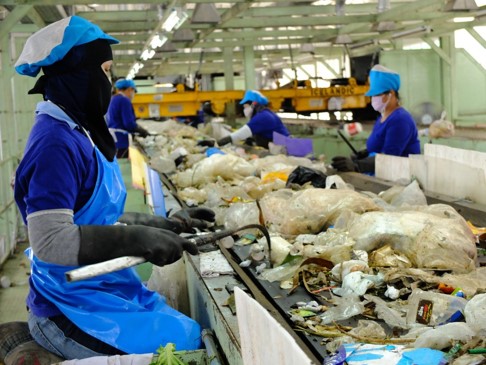
This is also where waste reduction becomes practical. Repeated off-spec material, excessive chemical dosing, leaking equipment or poor segregation can increase disposal costs and environmental risk. A waste record should therefore prompt another question: could the process have prevented or reduced this waste?
Stage 2 - Store and Label It Correctly
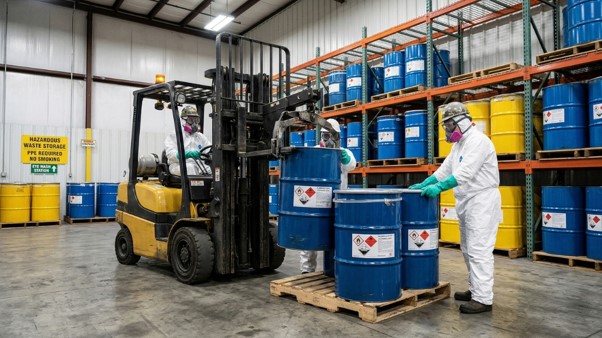
A scheduled waste store can look tidy and still be poorly controlled. Neat rows do not help if incompatible materials share the same containment area, labels cannot be read, containers are deteriorating or the inventory no longer matches what is physically present.
DOE’s packaging, labelling and storage guideline states that containers should be compatible with their contents, durable and capable of preventing leakage or spillage. It also addresses separation of incompatible wastes, closed containers, suitable storage design and clear identification (DOE packaging, labelling and storage guideline).
In practical terms, somebody should be able to enter the store and answer four basic questions without starting an investigation: What is here? When was it generated? What hazards does it present? What is the intended next destination?
The same DOE guideline states that scheduled waste may generally be stored for 180 days or less, provided the quantity accumulated on site does not exceed 20 metric tonnes; written approval may be sought for storage above that quantity (DOE guideline on storage requirements). Because conditions and approvals matter, teams should not reduce this requirement to the misleading phrase ‘we have six months.’ Both time and quantity require active monitoring.
Stage 3 - Record What Enters and Leaves the Store
The label is not decoration. It communicates what the container holds and what anyone handling it needs to recognise. When labels are missing, damaged or copied from a previous container without verification, uncertainty enters the system immediately.
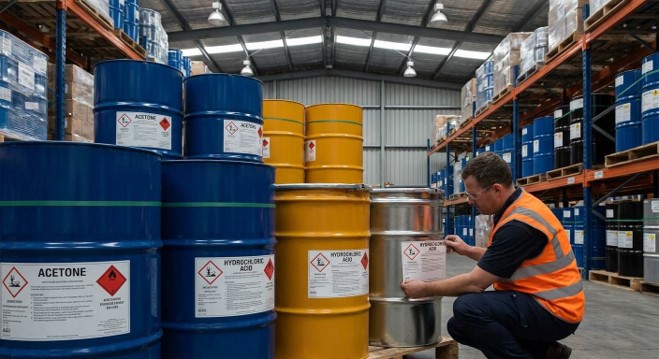
DOE guidance describes identification details such as the waste code, waste name, date generated and the generator’s contact information. It also calls for inventory records showing the date, type and quantity of waste entering or leaving the storage site (DOE scheduled waste storage guideline).
Records should agree with physical reality. If the inventory says twelve drums but the store contains fifteen, waste may have entered without control or a movement may not have been recorded. Routine reconciliation can reveal such problems while they remain manageable.
DOE’s scheduled waste information page explains that the electronic consignment system covers scheduled waste transactions and updates involving notifications, inventories and consignment notes. The current official platform is the Electronic Scheduled Waste Information System eSWIS.
Stage 4 - Prepare for Collection and Handover
Collection day deserves more attention than watching drums leave the gate. Before the handover, the company should confirm that the waste, quantity, packaging, labelling and documentation are consistent. The vehicle and receiving arrangement should match the intended movement, and the people involved should know what to do if a container is damaged or a discrepancy appears.
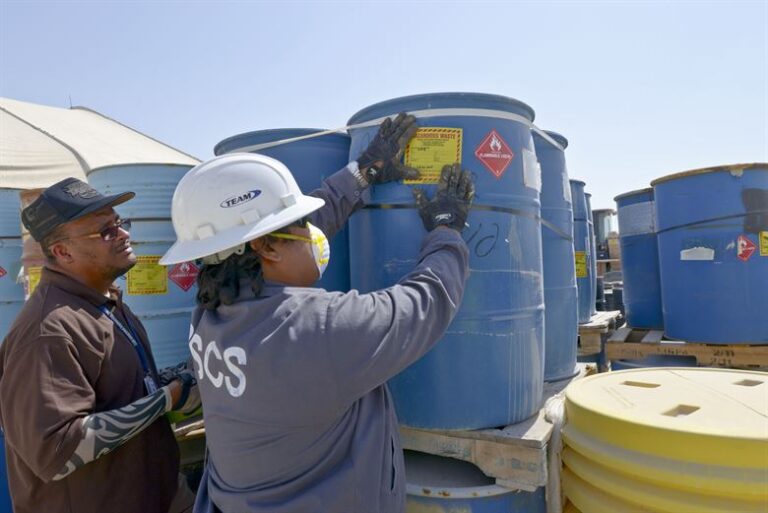
DOE states that scheduled waste must be recovered or disposed of at premises licensed by the Department, and its official scheduled waste information page directs users to the recognised contractor listing (DOE scheduled waste information).
Price and collection speed matter, but procurement should also know what service is being purchased. Is the waste going for recovery, treatment or disposal? Which facility will receive it? Does the documentation describe the waste being collected? A low quotation can become expensive if the route is unsuitable or cannot be traced.
Verify the chain rather than trusting the gap between collection and final receipt. If the organisation cannot explain where the waste is going, it does not yet understand the service it purchased.
Stage 5 - Follow the Waste to Its Receiving Facility
The paperwork and intended destination should travel with the waste journey. The organisation should be able to confirm that the receiving facility matches the agreed route and that the movement is completed as expected.
Where the Waste Goes for Recovery Treatment or Disposal
At an appropriate facility, useful components may be recovered, while other waste may require physical, chemical, biological or thermal treatment. Certain residues may ultimately require disposal.
The correct route cannot be chosen from a generic promise that the waste will be ‘handled.’ It depends on accurate classification and on the facility’s ability and authorisation to receive that particular waste. This is why decisions made at the generator’s premises continue to matter after collection.
Managers do not need to become treatment engineers, but they should expect a clear explanation of the destination. Vague answers, unexplained facility changes or inconsistent documents are reasons to pause and verify.
Who Keeps the Journey Under Control
A written procedure can describe the correct steps, but people must still recognise unusual conditions and make sound decisions. They need enough knowledge to question an unexpected waste, stop incompatible materials from being mixed, identify a deteriorating container and challenge a collection arrangement that does not match the records.
EiMAS identifies both the Certified Environmental Professional in Scheduled Waste Management (CePSWaM) and the Certified Operator in Scheduled Waste Management (COSWaM) among its industry competency courses (EiMAS competency course information). The appropriate development path depends on the person’s responsibilities, qualifications and experience; attending a course should support a defined workplace role rather than become certificate collection without application.
Organisations can strengthen the system by combining competent oversight with practical awareness for everyone who touches the waste stream. Competent environmental officers need clear segregation instructions. Store personnel need to understand compatibility, labelling and inspections. Purchasing teams need criteria for evaluating service providers. Managers need reliable information on quantities, ageing waste, costs and recurring sources.
Weak control often appears first as small exceptions: an unlabelled container left beside a process, a monthly inventory copied without checking, damaged drums awaiting collection or a contractor selected without confirming the destination. These are signs that the journey is becoming difficult to trace.
A useful inspection follows one actual waste stream from beginning to end. Check its classification, container, label, inventory movement, collection record and receiving destination. One real example often reveals more than a folder of forms reviewed in isolation.
Can You Trace the Complete Journey
The better question is whether the organisation can account for the waste journey. Can it explain how the waste was generated, why it received its classification, how it was stored, when it moved, who received it and what happened next?
When those answers are available and consistent, scheduled waste management becomes more than a collection routine. It becomes a traceable environmental control system, one that protects people and the environment while also exposing avoidable waste, weak processes and unnecessary cost.
The lorry leaving the gate is therefore not the end of the story. It is simply the point at which good preparation is tested. The strongest organisations remain interested until the destination is clear, the records agree and the lesson returns to the process that created the waste in the first place.