

The Thing to Understand About Environmental Audit
Most organizations conduct environmental audits because they are required to do so, whether by regulatory obligations, ISO 14001 requirements, customer expectations, or internal governance standards. Unfortunately, many audits become routine exercises that focus solely on identifying non-compliances without creating meaningful improvements.
The problem is not the audit itself. The problem is what happens before and after the audit.
Too often, organizations identify findings, close reports, and move on to the next audit cycle without addressing the underlying causes of recurring issues. As a result, the same non-conformities continue to appear year after year, limiting the effectiveness of the audit process.
This is where the Plan-Do-Check-Act (PDCA) Cycle becomes essential. When environmental audits are integrated into the PDCA framework, they evolve from a compliance activity into a continuous improvement mechanism that helps organizations reduce waste, lower costs, improve environmental performance, and strengthen their ability to maintain regulatory compliance.
What is the PDCA Cycle?
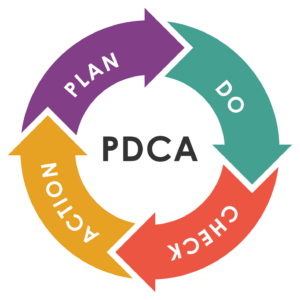
The Plan-Do-Check-Act (PDCA) Cycle is a widely recognized managementis methodology used to drive continual improvement. It forms the foundation of many management systems, including ISO 14001 Environmental Management Systems.
Plan
Do
Check
Act
- Identifying environmental objectives and improvement targets
- Determining applicable legal and regulatory requirements
- Assessing environmental risks and impacts
- Establishing procedures, responsibilities, and resources
- Setting performance indicators to measure success
- Executing environmental procedures and operational controls
- Managing scheduled wastes and other environmental aspects
- Conducting employee training and awareness programmes
- Implementing waste reduction and segregation initiatives
- Maintaining required records and documentation
- Conducting inspections and environmental audits
- Monitoring and measuring environmental performance
- Assessing compliance with legal requirements
- Reviewing environmental objectives and targets
- Identifying non-conformities and improvement opportunities
- Implementing corrective and preventive actions
- Addressing root causes of non-conformities
- Updating procedures and operational controls
- Strengthening employee competency and awareness
- Establishing new improvement initiatives and targets
Why Many Environmental Audits Fail to Deliver Real Value
Environmental audits are powerful tools, but their effectiveness depends on how organizations use the results.
Common reasons audits fail to deliver long-term value include:
- Audits conducted solely to satisfy certification or compliance requirements
- Corrective actions that are delayed or ineffective
- Repeated non-conformities appearing in successive audits
- Lack of root cause analysis
- Limited management involvement
- Failure to verify the effectiveness of corrective actions
- Audit findings that are documented but not translated into system improvements

For example, a company may repeatedly receive findings related to incomplete scheduled waste labels. The labels are corrected before each audit, but the issue reappears because employees were never properly trained, work instructions were unclear, or supervisors failed to conduct regular inspections.
In such situations, the organization addresses the symptom but not the cause.
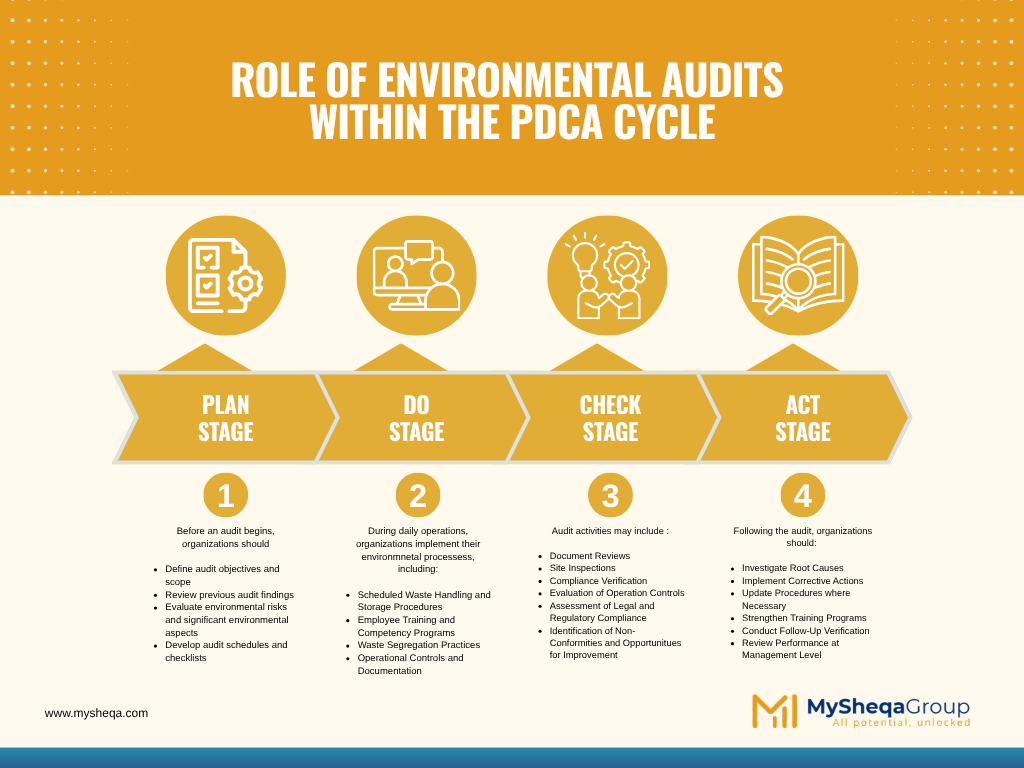
The Role of Environmental Audits Within the PDCA Cycle
Environmental audits should not be viewed as standalone activities. Instead, they should support every stage of the PDCA cycle.
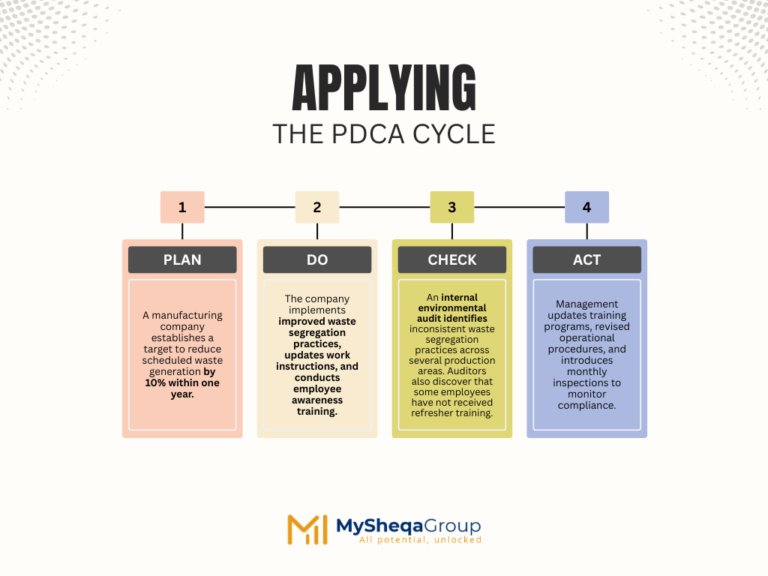
Applying the PDCA Cycle to Scheduled Waste Management
A practical example can be seen in the graph below.
Environmental Audits Are Not Just for ISO 14001 Companies
One common misconception is that environmental audits are only necessary for organizations certified to ISO 14001.
In reality, environmental audits can benefit any organization that generates scheduled waste or is subject to environmental regulations.
In Malaysia, organizations must comply with requirements under the Environmental Quality Act 1974 and the Environmental Quality (Scheduled Wastes) Regulations 2005 regardless of whether they are ISO certified.
Internal audits help organizations:
- Identify compliance gaps before regulatory inspections
- Improve waste management practices
- Reduce environmental risks
- Strengthen documentation and record-keeping
- Prepare for Department of Environment (DOE) inspections
For many organizations, an effective internal audit may identify issues before they result in enforcement actions, penalties, or operational disruptions.
Business Benefits of PDCA-Based Environmental Audits
When environmental audits are integrated into the PDCA cycle, organizations can achieve benefits that extend beyond compliance.
1. Improved Ability to Maintain Regulatory Compliance
Regular audits help organizations identify potential compliance gaps and take corrective actions before external inspections occur.
2. Better Waste Management Performance
Audits can uncover inefficiencies in waste generation, storage, handling, and disposal processes.
3. Reduced Environmental Risk
Organizations can identify and address weaknesses before they lead to environmental incidents or regulatory violations.
4. Improved Operational Efficiency
By identifying process inefficiencies, unnecessary waste generation, and ineffective controls, audits may contribute to improved operational performance and resource utilization.
5. Stronger Continuous Improvement Culture
Regular audits encourage departments to evaluate their performance, address weaknesses, and pursue ongoing improvement rather than simply maintaining compliance.
What Top Management Should Be Looking For
Environmental audits should not simply answer the question:
“Are we compliant?”
Management should also ask:
- Are we improving our environmental performance?
- Are our environmental controls effective?
- Are we reducing environmental risks?
- Are we meeting our environmental objectives?
- Are we generating avoidable waste and unnecessary costs?
- Are corrective actions preventing recurrence?
When management begins asking these questions, environmental audits become strategic business tools rather than administrative exercises.
Conclusion
Environmental audits are most effective when they are integrated into the Plan-Do-Check-Act cycle. Rather than treating audits as isolated compliance activities, organizations should view them as part of a broader continuous improvement framework.
By applying the PDCA approach, environmental audits become more than inspections. They become valuable management tools that help organizations improve environmental performance, strengthen compliance, reduce waste, manage risks, and support long-term business success.
The organizations that gain the greatest value from environmental audits are not necessarily those that find the fewest non-conformities. They are the ones that use audit findings to drive meaningful improvement throughout the business.