

Chemicals are used across many Malaysian industries, including manufacturing, construction, agriculture, laboratories, healthcare, automotive services and facility management. Although these chemicals support essential operations, uncontrolled exposure can cause poisoning, respiratory illness, skin disease, organ damage, occupational cancer and other long-term health effects.
This is why employers need to understand Chemical Health Risk Assessment, commonly known as CHRA.
In Malaysia, CHRA is an important component of workplace chemical safety management and compliance with the Occupational Safety and Health (Use and Standards of Exposure of Chemicals Hazardous to Health) Regulations 2000, or USECHH Regulations 2000.
This guide explains what CHRA is, when it is required, who can conduct it and what employers, and HSE practitioners should do before and after an assessment.
What Is CHRA?

CHRA stands for Chemical Health Risk Assessment. It is a systematic assessment of the health risks arising from the use, handling, storage or transportation of chemicals hazardous to health at the workplace.
A CHRA does more than identify the chemicals kept at a facility. It examines how employees may be exposed during actual work activities and determines whether the existing control measures provide adequate protection.
The assessment produces a written CHRA report containing the assessor’s findings, risk conclusions and recommended actions.
A CHRA should not be treated as a compliance document that is prepared and then filed away. A properly conducted assessment provides the employer with a practical plan for preventing chemical exposure and protecting employees’ health.
CHRA and the USECHH Regulations 2000
The main legal framework governing employee exposure to hazardous chemicals in Malaysia is the Occupational Safety and Health (Use and Standards of Exposure of Chemicals Hazardous to Health) Regulations 2000, commonly referred to as the USECHH Regulations 2000.
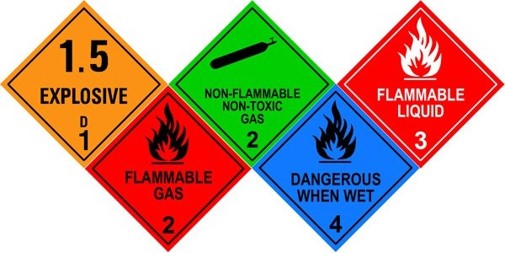
The regulations provide a framework for employers to identify, assess and control health risks arising from chemicals hazardous to health. They also establish exposure standards and other requirements for managing hazardous chemicals at work.
According to the Department of Occupational Safety and Health Malaysia, an employer must not carry out work that may expose, or is likely to expose, an employee to chemicals hazardous to health unless a written assessment of the associated health risks has been completed.
The requirements are not limited to chemicals purchased in bottles, drums or containers. They may also apply to hazardous substances generated during work, including dust, fumes, vapours, gases and etc. Examples include welding fumes, silica dust from cutting activities, solvent vapours from painting, wood dust from machining and chemical mists produced during spraying.
DOSH guidance also explains that a substance classified as a chemical hazardous to health under the CLASS Regulations may fall within the scope of USECHH, even when it is not specifically listed in the relevant USECHH schedules.
What Do the USECHH Regulations Require?
CHRA is only one part of compliance with the USECHH Regulations. The employer remains responsible for compliance. Appointing a registered CHRA assessor does not transfer that responsibility to the assessor.
The assessor identifies and evaluates chemical health risks and recommends the actions needed. The employer is responsible for implementing, maintaining and reviewing the recommended controls.
DOSH guidance explains that Regulation 14 requires employers to take action to eliminate or reduce actual or potential exposure. Required changes to processes, work practices, procedures, plant or engineering controls should be acted upon within one month of receiving the assessment report.
Understanding the USECHH Regulations helps employers view CHRA as part of a continuing chemical health management system, rather than a one-time report prepared only for an inspection.
When Is CHRA Required in Malaysia?
A CHRA is required when work may expose, or is likely to expose, employees to chemicals hazardous to health.
This requirement is not limited to chemical manufacturers. It may apply to any workplace where hazardous chemicals are used, handled, stored or transported, or where hazardous contaminants are generated through a work process.
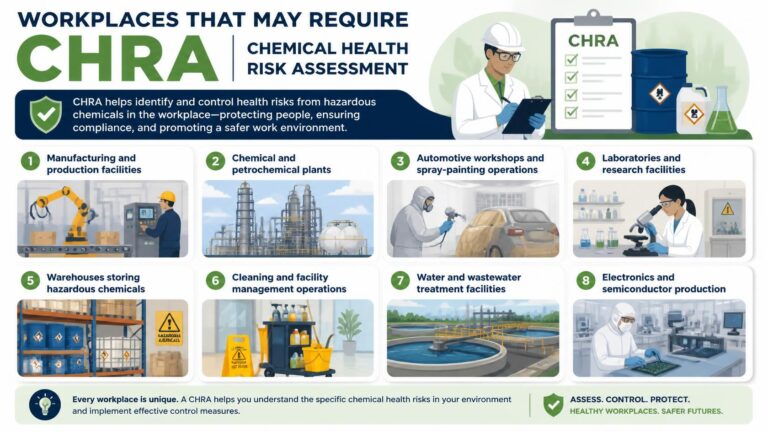
Employers should review both the chemicals supplied to the workplace and any hazardous substances generated by their operations.
Signs That Your Workplace May Need a CHRA
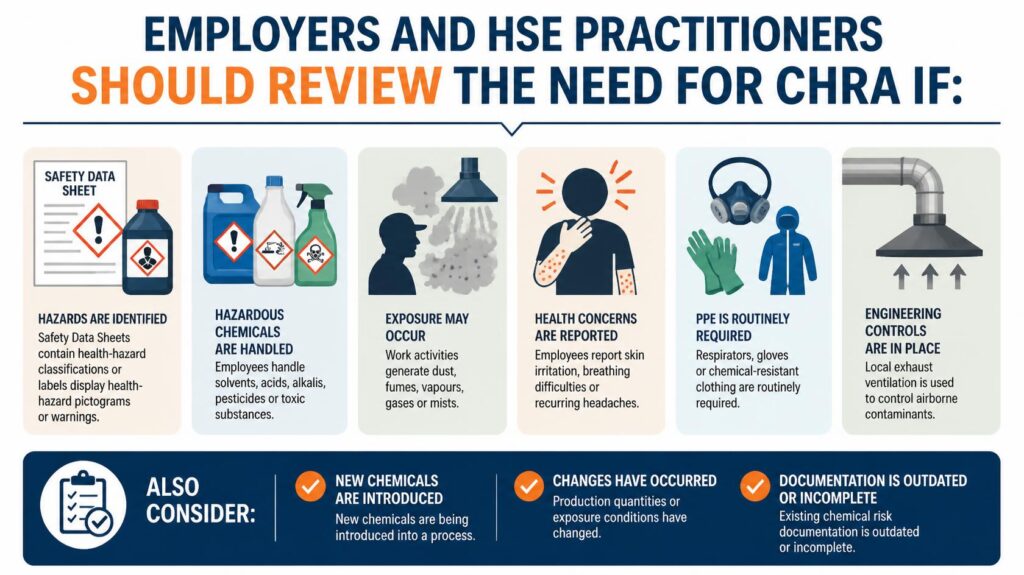
There are some employers or safety personnel that question the difference between conducting a CHRA and simply filling in a Safety Data Sheet. While a Safety Data Sheet is an important source of chemical information, it is not a substitute for CHRA.
The Safety Data Sheet explains the general hazards and precautions associated with a product. A CHRA evaluates how the chemical is actually used and how employees may be exposed in a specific workplace.
WHO CAN CONDUCT CHRA IN MALAYSIA?
A CHRA must be conducted by a CHRA assessor registered with the Director General of Occupational Safety and Health.
Employers should not assume that every safety consultant, Safety and Health Officer, chemist or occupational health practitioner is authorised to conduct and issue a CHRA report. The appointed assessor must hold the appropriate and current registration recognised by DOSH.
Employers should verify the assessor’s registration through the latest information or registered-person listing provided on the official DOSH chemical management portal before confirming an appointment.
An internal HSE practitioner can support the assessment by preparing chemical records, arranging site access, explaining work activities and coordinating employee interviews. However, this support does not replace the role of the registered CHRA assessor.
What Does a CHRA Assessor Examine?
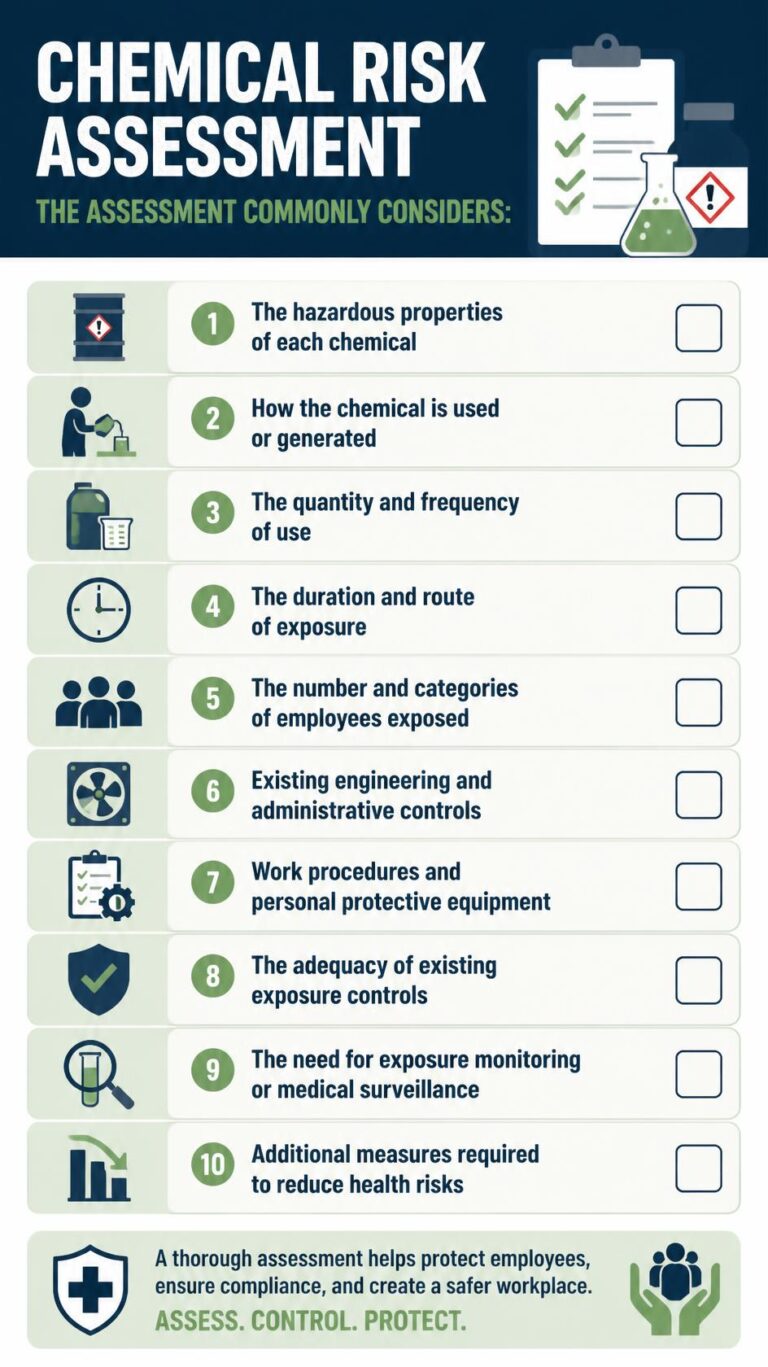
A CHRA assessor normally evaluates the workplace systematically instead of reviewing only the chemical store or Safety Data Sheets.
1. Chemical information
The assessor reviews the chemical register, Safety Data Sheets, labels, classifications, quantities used and relevant exposure standards.
2. Work activities
The assessor examines how employees receive, transfer, mix, apply, process, store and dispose of chemicals. Cleaning, maintenance and emergency tasks may also need to be assessed.
3. Exposure pathways
Exposure may occur through inhalation, skin contact, absorption, ingestion or accidental injection. The assessor determines which routes are relevant to each activity.
4. Existing controls
Existing controls may include chemical substitution, process enclosure, isolation, local exhaust ventilation, safe work procedures, training, hygiene facilities and PPE.
5. Employee exposure
The assessor considers the frequency and duration of the activity, the number of employees exposed and whether any employees face higher levels of risk.
6. Adequacy of controls
The assessor evaluates whether the existing controls are suitable, maintained correctly, used consistently and capable of reducing exposure to an acceptable level.
The final report may recommend improvements to engineering controls, exposure monitoring, medical surveillance, employee training, PPE or work procedures.
What Should Employers Prepare?
Good preparation improves the accuracy of the assessment and helps the assessor understand actual working conditions.
Employers should prepare:
- An updated chemical register
- Current Safety Data Sheets
- Chemical labels and product information
- Process flowcharts and workplace layouts
- Lists of exposed employees and job categories
- Existing risk assessments and safe work procedures
- PPE specifications and issuance records
- Ventilation inspection or testing reports
- Previous chemical exposure monitoring results
- Medical surveillance information, where applicable
- Records of chemical incidents, illnesses or complaints
- Information on operating schedules and task frequency
The assessor should also be given an opportunity to observe normal operations. If important chemical processes are not operating during the site visit, the assessor may not be able to evaluate the actual exposure conditions properly.
What Happens After the CHRA Report?

Receiving the CHRA report is not the end of the process. The employer must review its findings and implement the recommendations.
The recommendations should be converted into an action plan that identifies:
- The improvement required
- The person responsible
- The target completion date
- The resources or budget needed
- The method for verifying completion
- The supporting records to be retained
Priority should be given to eliminating the hazardous chemical or replacing it with a less hazardous alternative where practicable. Engineering controls should be considered before relying mainly on administrative measures or PPE.
PPE remains important, but it is the final layer of protection and depends heavily on correct selection, fit, use, cleaning, storage and maintenance.
WHEN SHOULD A CHRA BE REVIEWED?
CHRA should not be treated as a permanent, one-time assessment. A reassessment is generally required:
- Within five years of the previous assessment
- When there is a significant change in the work
- When new information indicates that existing controls may be inadequate
- When the existing assessment is no longer valid
- When directed by the Director General
A significant change could involve introducing a new chemical, changing a formulation, increasing production, modifying ventilation, installing new equipment or changing how an activity is performed.
Employers should not wait until the five-year period ends if workplace conditions have changed earlier.
CHRA IS MORE THAN A LEGAL REQUIREMENT

An effective CHRA Malaysia programme connects chemical hazard information with actual workplace conditions. It helps employers understand who may be exposed, how exposure occurs and whether the controls are genuinely effective.
For HSE practitioners, the assessment provides a technical basis for planning exposure monitoring, medical surveillance, training, ventilation improvements, PPE programmes and safe work procedures.
For employers, CHRA supports regulatory compliance while reducing the risk of occupational illness, operational disruption, enforcement action and long-term compensation costs.
The strongest approach is to maintain an updated chemical register, assess risks before hazardous work begins, appoint a DOSH-registered CHRA assessor and track every recommendation through to completion.
TAKE THE NEXT STEP TOWARDS A BETTER CHEMICAL SAFETY
CHRA is more than a regulatory document. It is a practical tool that helps employers identify chemical health risks, evaluate existing controls and protect employees from short- and long-term occupational illnesses.
Compliance with the USECHH Regulations 2000 requires ongoing attention. Employers must maintain an updated chemical register, obtain current Safety Data Sheets, appoint a DOSH-registered CHRA assessor, implement the assessment recommendations and review the assessment whenever workplace conditions change.
For HSE practitioners, a good understanding of CHRA and USECHH requirements is essential for managing chemicals effectively. It supports better decisions on exposure monitoring, medical surveillance, engineering controls, employee training, safe work procedures and personal protective equipment.
Organisations should not wait for an employee complaint, chemical incident or regulatory inspection before reviewing their chemical health risks. Acting early helps create a safer workplace, strengthen legal compliance and prevent occupational illness.
Need to strengthen your team’s understanding of CHRA and the USECHH Regulations 2000? MySHEQA provides professional occupational safety and health training to help employers and HSE practitioners improve chemical safety awareness and workplace compliance.
Contact MySHEQA to discuss a suitable training programme for your organisation.